Can I Pour My Own Concrete Patio?
Pouring your own concrete patio might seem like a straightforward way to save money, especially if you enjoy hands-on projects. At first glance, it looks simple — set forms, mix concrete, pour it, and smooth it out. But in reality, there’s a lot more going on beneath the surface.
Before deciding whether to take on the job yourself or hire a concrete contractor, it’s important to understand what the process actually involves — and where most DIY projects run into problems.
In hotter regions like Bakersfield and throughout Kern County, temperature and soil conditions can make concrete work even more challenging if you’re not prepared.
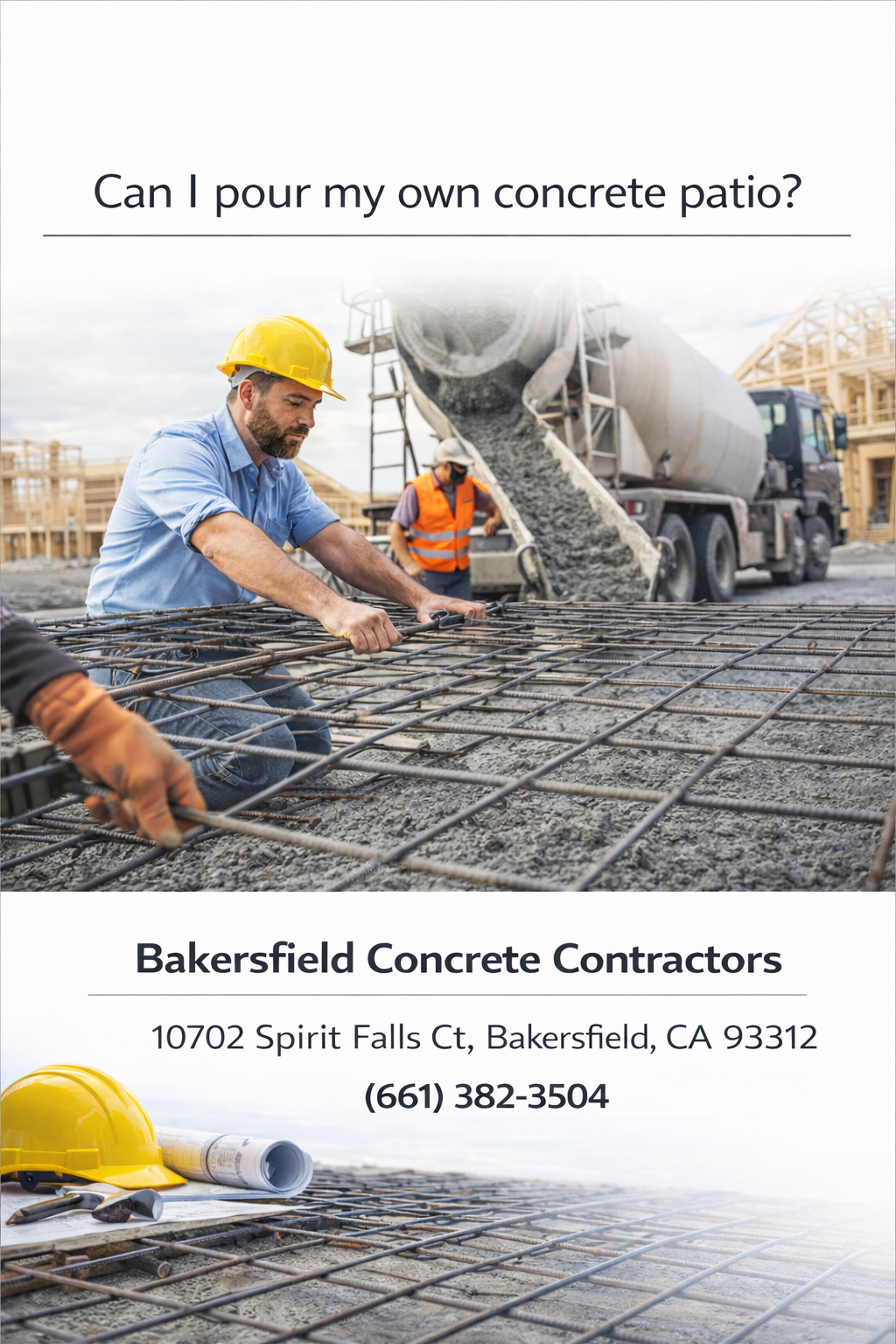
Proper preparation and timing are critical when pouring a concrete patio.
What Goes Into Pouring a Concrete Patio?
Pouring a patio involves more than just the concrete itself. The full process includes excavation, base preparation, forming, mixing, pouring, finishing, and curing. Each step must be done correctly — and within a limited timeframe.
Concrete begins setting quickly, especially in warm, dry environments. That means you don’t have unlimited time to adjust mistakes once the pour begins.
Step 1: Ground Prep and Base Installation
The strength of your patio starts below the surface. Proper grading and compaction are essential to prevent shifting, sinking, or cracking.
Many DIY projects fail not because of the concrete itself, but because the base underneath wasn’t properly prepared.
Experienced concrete patio installers always prioritize this step to ensure long-term stability.
Step 2: Forms and Layout
Forms create the shape and level of your patio. If they’re not set correctly, water may not drain properly, leading to pooling and long-term damage.
Getting the slope right is especially important in outdoor areas where water runoff matters.
Step 3: Mixing and Pouring
Concrete needs the correct water-to-cement ratio. Too much water weakens the slab. Too little makes it difficult to work with.
This step requires coordination. Once you begin pouring, you need to work continuously until the slab is placed and leveled.
Step 4: Finishing the Surface
Finishing determines how your patio looks and performs. This includes smoothing, edging, and applying texture if needed.
Poor finishing can lead to rough surfaces, uneven areas, or premature wear.
Step 5: Curing the Concrete
Curing allows concrete to develop strength over time. This process is often overlooked in DIY projects.
Without proper curing, even a well-poured patio can crack or weaken early.
Common DIY Mistakes
- Skipping proper base preparation
- Incorrect mixing ratios
- Poor timing during the pour
- Inconsistent finishing techniques
- Not curing the slab properly
These mistakes may not show immediately but can lead to costly repairs later.
Mini Case Example: DIY Patio Gone Wrong
A homeowner attempted to pour a patio during peak summer heat without enough help. The concrete began setting before it could be finished properly, resulting in uneven surfaces and weak areas.
After replacement by professionals, the new patio included proper base preparation, reinforcement, and curing — resulting in a stable, long-lasting surface.
Is DIY Worth It?
For small projects, a DIY approach may work if you have the tools, time, and support. However, larger patios or areas with soil movement require more precision.
Many homeowners who initially search for concrete contractor near me eventually choose professional installation after realizing the complexity involved.
Frequently Asked Questions About Pouring a Concrete Patio
Can I pour a concrete patio by myself?
It’s possible for very small projects, but most pours require multiple people due to time constraints and finishing requirements.
How thick should a patio be?
Most patios are about 4 inches thick, but this depends on soil conditions and intended use.
How long does it take to cure?
Concrete sets within 24–48 hours but continues curing for about 28 days.
What happens if I add too much water?
Excess water weakens the concrete and increases the likelihood of cracking.
Planning Your Concrete Patio Project?
Understanding the process helps you decide whether DIY or professional installation is the right choice.
When you're ready to move forward, visit our home page or reach out to discuss your project with an experienced team.